Tastenexa
All recipes
Pakistani
Beef Nihari
140 min total20 prep120 cook4 servings510 cal
ClassicPaleoLow-CarbContains gluten
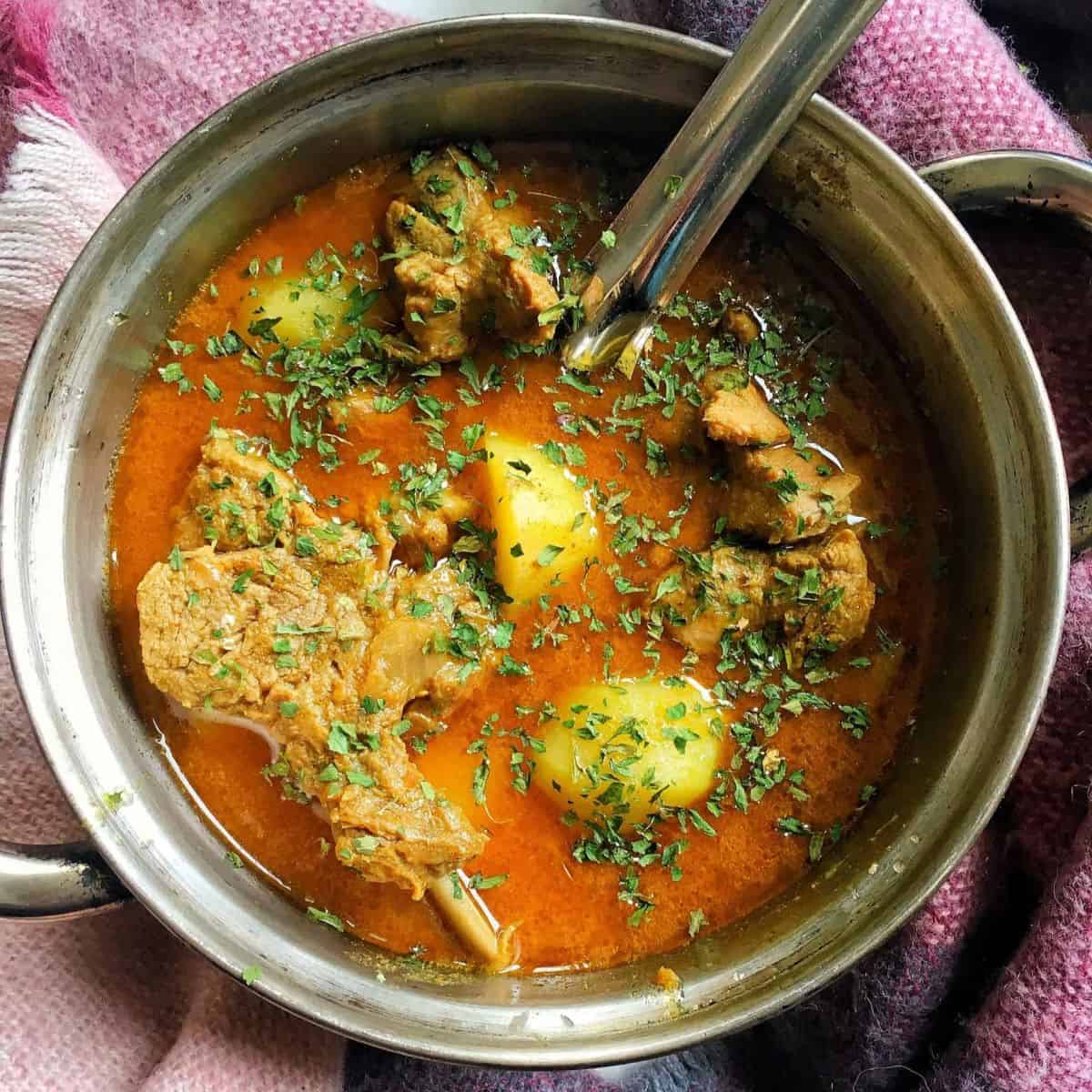
Beef shank simmers low and slow with caramelized onions, ginger, garlic, and nihari masala until it's fall-apart tender, then gets thickened with a simple flour slurry into a rich, glossy stew. Finished with lemon, cilantro, and green chili, it's a slow-cooked classic worth the wait.
Ingredients
meat
- 800 gbeef shank
dairy
- 3 tbspghee
produce
- 2onion
- 2 tbspginger paste
- 2 tbspgarlic paste
- 2green chilies
- 2 tbspcilantro
- 1lemon
pantry
- 3 tbspnihari masala
- 2 tbspwheat flour
- 1 tspsalt
Steps
- Cut the beef shank into 2-inch chunks and pat dry with paper towels.
- Thinly slice the onions.
- Heat the ghee in a heavy pot over medium-high heat. Sear the beef in batches until browned on all sides, about 8 minutes total, then transfer to a plate.
- Add the sliced onions to the same pot and cook for 8-10 minutes, stirring occasionally, until deeply golden and softened.
- Stir in the ginger paste and garlic paste and cook for 1-2 minutes until fragrant.
- Add the nihari masala and stir for 1 minute to toast the spices in the fat.
- Return the beef to the pot with the salt and enough water to cover, about 1.5 liters. Bring to a boil.
- Reduce the heat to low, cover, and simmer for 1.5-2 hours, stirring occasionally and topping up water as needed, until the beef is fork-tender and shreds easily.
- Whisk the wheat flour with a ladleful of the hot broth in a small bowl until smooth and free of lumps.
- Stir the flour slurry into the pot and simmer uncovered for 10 minutes, stirring occasionally, until the stew thickens to a glossy, gravy-like consistency.
- Taste and adjust the salt as needed.
- Ladle into bowls, then top with sliced green chilies and chopped cilantro.
- Serve hot with lemon wedges alongside for squeezing.
Tips
- Sear the beef in batches without crowding the pot — overcrowding drops the temperature and the meat steams instead of browning.
- Cook the onions until they're truly deep golden brown; this is where a lot of the stew's color and depth comes from.
- Whisk the flour into cold or lukewarm broth first before adding it back to the hot pot — this prevents lumps in the gravy.
- Nihari tastes even better the next day once the flavors have had time to sit, so don't hesitate to make it ahead.