Tastenexa
A vegetarian meal plan for the week that stays satisfying
A vegetarian week fails when every dinner is a salad with ambition. Satisfying means beans, eggs, tofu, grains, and sauces you want to eat again.
A vegetarian meal plan for the week should leave you full. That sounds obvious until you look at a lot of meatless plans: a pile of greens, a sprinkle of seeds, and a promise that you will get used to it. You will not get used to being hungry at 9 p.m. You will get takeout. The fix is ordinary food with enough substance — beans, lentils, eggs, dairy if you eat it, tofu or tempeh, grains, bread, and vegetables cooked like you meant it.
This is a cooking plan, not a nutrition prescription. Vegetarians do not all eat the same way. Some eat eggs and dairy. Some do not. If you are choosing among styles, the plain-language comparison is in how to choose a diet style that sticks. Pick the version you will still want on Thursday, then plan that.
What “satisfying” means at the stove
A plate that holds you usually has three things: something hearty (beans, eggs, tofu, cheese, yogurt), something with chew or bulk (grains, potatoes, bread, roasted vegetables), and something with flavor (salt, acid, a sauce, browning). Skip any one of them and the meal feels like a side dish.
- Hearty: lentils, chickpeas, black beans, eggs, paneer or cheese if you eat dairy, firm tofu, tempeh.
- Bulk: rice, pasta, potatoes, bread, farro, tortillas.
- Flavor: garlic, onion, tomato paste, soy sauce, miso, lemon, chili, yogurt sauces, pesto, salsa.
You do not need a gram target to use this. If a meal is mostly leaves, add a cup of beans or a couple of eggs. If a meal is only cheese and bread, add a vegetable you will actually eat. Balance here is appetite, not a clinic worksheet.
Stock a vegetarian week once
A good week shares a short shopping list. Buy for overlap, the same way any budget week works — details in how to build a grocery list that saves money.
- Cans and jars: tomatoes, chickpeas, black beans, coconut milk if you like curries.
- Dry: rice or another grain, pasta, lentils, oats, tortillas.
- Fresh with jobs: onions, garlic, one sturdy vegetable, one softer vegetable, a lemon, herbs you have a plan for.
- Fridge: eggs, yogurt or a dairy-free alternative you like, tofu, a cheese you will use more than once if you eat it.
Tomato paste cooked until it darkens, soy sauce, miso, mushrooms, and a hard cheese if you eat dairy make vegetarian food taste finished. A pot that tastes thin is usually missing one of those, not missing a steak.
A simple week you can repeat
Servings are for two, with leftovers that become lunch. Scale up if the table is bigger. Swap any night that does not fit the calendar — the method for that audit is in how to meal plan for the week.
- Monday — chickpea tacos. Warm chickpeas with chili, cumin, and garlic. Cabbage slaw. Yogurt or avocado. Tortillas. Ten minutes of flavor, no new technique.
- Tuesday — dal or lentil stew with rice. Onion, garlic, canned tomatoes, lentils, spinach if you have it. Make extra. This is the lunch that saves Wednesday.
- Wednesday — eggs and the extra dal, or a fried rice with the extra rice, frozen vegetables, and an egg. A planned leftover night, not a compromise.
- Thursday — pasta with white beans and greens. Olive oil, garlic, chili, lemon, the rest of the greens. Beans make the pasta a meal. Cheese on the side for whoever wants it.
- Friday — tofu or halloumi tray with potatoes and a vegetable that roasts well. If you do not eat those, roast chickpeas again in a different sauce. Same oven, different costume.
- Saturday — one longer recipe you actually want, or dinner out. Put it on the plan so you do not shop for a meal you will not cook.
- Sunday — a pot of chili or minestrone that becomes Monday’s backup. Vegetarian cooking gets easier when a pot already exists.
That week uses one onion logic, one lemon, one bunch of herbs, and beans more than once. You are not buying a new identity at the store every night.
Lunches, without a second plan
Dinner leftovers are the lunch plan until that feels boring. When it does, prep one extra component on Sunday: a pot of grains, a tray of roasted vegetables, or boiled eggs. Combine them with a sauce. That is component prep, explained as a one-hour routine in meal prep for beginners. You do not need a matching set of containers to eat a bean bowl at your desk.
If you want those lunches to lean harder on filling foods — eggs, yogurt, tofu, lentils — the same idea is stretched in high-protein meal prep. Still cooking, still not a medical target.
The fastest way to feel bored is seven unrelated recipes. The fastest way to feel trapped is one recipe seven times. Cook two bases and change the sauce: salsa Monday, tahini Thursday, tomato Wednesday. Same groceries. Different dinner.
Eating with people who are not vegetarian
You do not have to cook two full menus. Cook the vegetarian meal as the main, and add a piece of meat or fish to the other plates if someone wants it. Tacos, grain bowls, pasta, and baked potatoes all work this way. The method is the same as family meal planning: one base, optional toppings.
If you are the only vegetarian in the house, keep two or three meals that are yours on the shared plan so you are not negotiating from scratch every night. A can of beans and a block of tofu in the fridge are more useful than a speech.
Flavor mistakes that make people quit
- All salads. A salad can be dinner if it has beans or eggs, a starch, and a real dressing. A bowl of leaves is a side.
- Under-salted beans. Beans take more salt than you think, and they need acid at the end.
- No plan for the herbs. Cilantro without a second meal becomes waste. Assign it.
- Treating cheese as the only protein and then wondering why you want a snack. Add beans or eggs to the cheese, not instead of a plan.
- A new cuisine every night. Pick a lane for the week so the spices you open get used again.
How to start this week, not someday
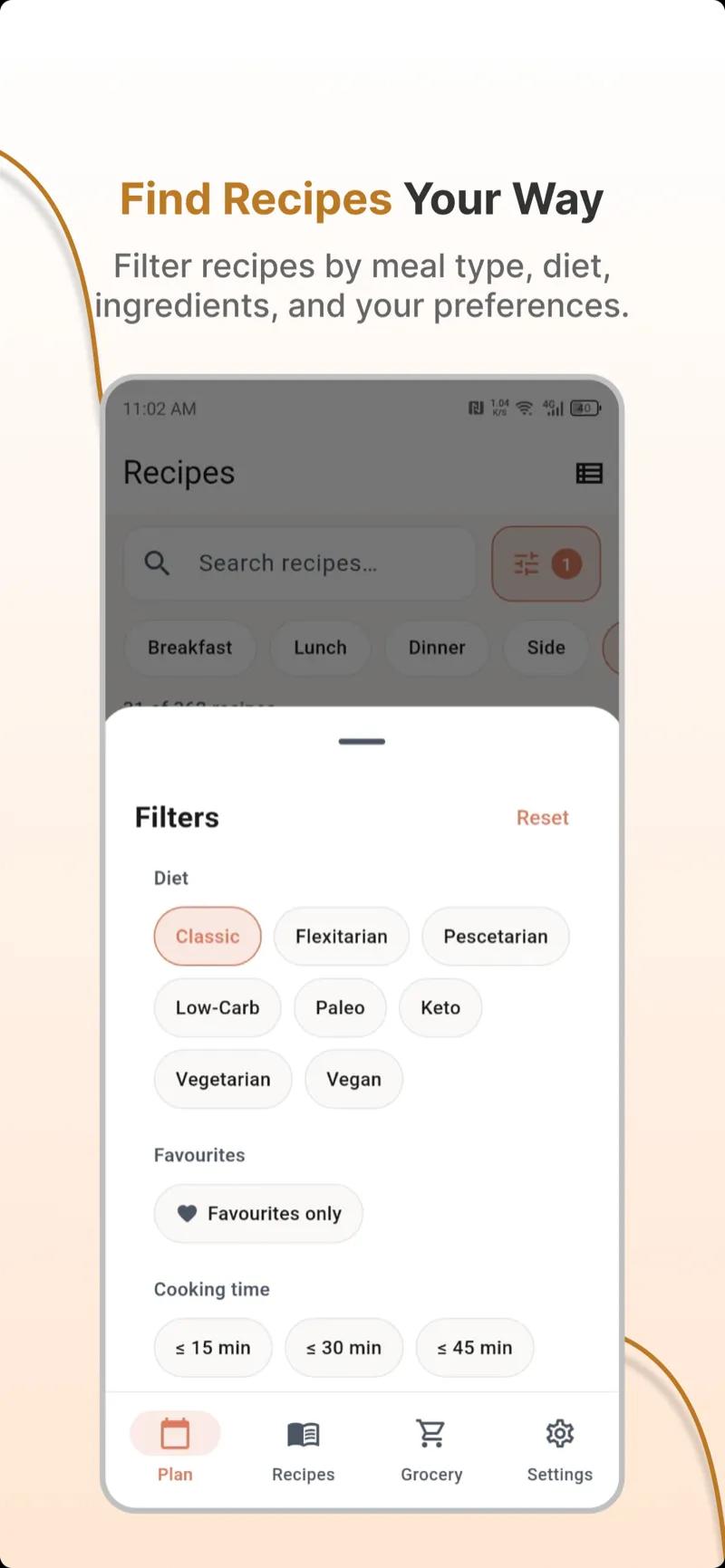
Choose four dinners from the sample, or from the recipe library filtered to the way you eat. Check the calendar. Write one list. Cook Monday even if it is “only” chickpeas. The week becomes vegetarian when the food is in the house and the decision is already made — not when you find the perfect template.
Next week, keep the two meals you were glad to eat and replace the one you avoided. That is a vegetarian meal plan. Simple was the point. Satisfying is what makes you cook it again.