Tastenexa
Budget meal planning: eat well without overspending
Most food budgets do not break on steak. They break on the second trip, the unused herbs, and seven recipes that refuse to share a single onion.
Budget meal planning is a shopping problem disguised as a cooking problem. You can eat well on a normal grocery bill if the week is built so ingredients get used more than once and you only enter the store with a list. You cannot save money by collecting virtuous recipes that each require a new sauce, a new herb, and a protein you will cook once.
Eat well, here, means meals you will actually finish: enough protein and vegetables to be satisfying, enough repetition to be affordable, enough flavor that you do not “fix” a boring plan with takeout on Wednesday. It does not mean a joyless rotation of plain rice. Flavor is cheap. Waste is not.
Find the leaks before you cut the good stuff
Before you swap steak for beans forever, look at where the money already goes. Four leaks show up in almost every household, and none of them require a spreadsheet to see.
- The midweek top-up. You shopped Sunday, then bought dinner ingredients again on Wednesday because the plan was vague.
- Produce without a job. A vegetable bought “to be healthy” and never assigned to a meal.
- Duplicate staples. A new bottle of soy sauce because you did not check the cupboard. A second milk because the list was not grouped.
- Aspirational recipes. You buy for the Saturday-morning version of yourself. Tuesday-you orders food and the ingredients wait.
Fixing those four usually saves more than switching every meal to the cheapest possible calorie. The list mechanics are covered in how to build a grocery list that saves money. The waste half is in how to stop food waste. Budget planning is those two skills pointed at a weekly menu.
Build the week from shared ingredients
Pick a short cast of foods and let them recur. A useful budget week often hangs on two proteins, one grain, two or three vegetables, and a couple of sauces you already know how to make. Variety comes from the way you combine them, not from a new shopping identity every night.
Example: chicken thighs, eggs, rice, cabbage, carrots, onions, canned tomatoes, tortillas, yogurt, and a bunch of cilantro. That short list can become sheet-pan chicken and rice, a quick fried rice, tacos, and a tomato-y skillet with eggs. You bought cilantro once and used it four times. You did not buy four different “kits.”
A slightly nicer cheese used across three meals can cost less than three separate “cheap” convenience items that each solve only one dinner. Ask what the ingredient does for the week before you put it in the cart.
A practical cost order for proteins
You do not need a unit-price hobby. You need a default order so decisions are fast when you are tired. Prices move, so treat this as a shopping habit, not a law.
- Eggs, dried beans, lentils, canned beans, tofu. The backbone. They take on whatever sauce the rest of the week is using.
- Chicken thighs, whole chickens, canned fish, store-brand yogurt. Often the best balance of cost, flavor, and leftovers.
- Ground meat in bulk when the price is ordinary. One pack, two meals: tacos and a sauce for pasta or baked potatoes.
- Steaks, specialty cuts, and meal-kit portions. Fine as a planned exception. Expensive as a personality.
Plan one or two “splurge” meals if you want them, and let the other nights carry the week. A budget that bans every food you like will last until the first bad day. A budget that schedules the nicer meal is a plan you can repeat. If you are choosing a broader pattern — vegetarian, classic, low-carb — decide that first so you are not rebrowsing the store. Choosing a diet style that sticks is the guardrail. The budget is the grocery expression of it.
The one-list shop
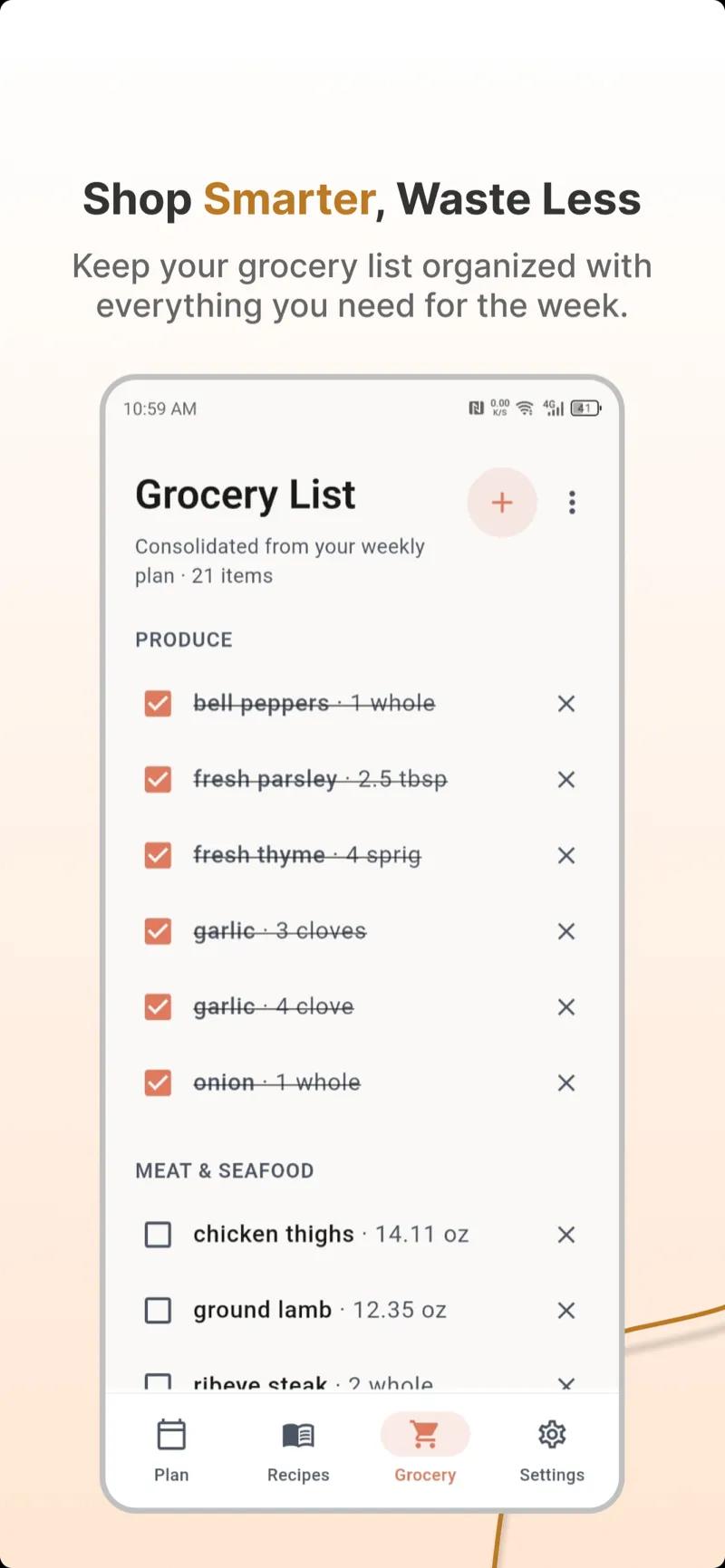
Write the list while you choose meals, not afterward. Group it the way the store is laid out: produce, dairy, meat, dry goods, freezer. Merge anything that appears twice. “Onion” from three recipes is one line with a quantity, not three scattered reminders that trick you into buying three onions more than you need — or, worse, forgetting and buying a net bag you will not finish.
Check the kitchen before you add staples. The budget win is often the thing you did not buy. Then shop once. If you can, eat first. A list still loses to an empty stomach in the snack aisle, but it loses less.
- Store-brand the staples you use for function: canned tomatoes, oats, rice, beans, frozen vegetables, pasta, yogurt.
- Buy flavor in small amounts: a decent chili crisp, lemons, garlic, vinegar. These make cheap meals feel finished.
- Frozen vegetables are not a downgrade. They wait. Fresh herbs do not. Use frozen when the meal is a soup, curry, fried rice, or scramble.
- Skip the duplicate convenience item if the ingredients to make it are already on the list for another night.
A sample budget week
This is a shape, not a menu you must follow. It assumes you cook most nights and already have salt, oil, and a few spices.
- Monday: bean tacos with cabbage slaw. Canned beans, tortillas, onion, yogurt or salsa.
- Tuesday: roast chicken thighs, rice, and carrots. Save some chicken and rice on purpose.
- Wednesday: fried rice with the saved chicken, frozen vegetables, and an egg.
- Thursday: tomato skillet with chickpeas or the remaining chicken, over rice or with bread.
- Friday: eggs and beans again, different costume — shakshuka-style with the rest of the canned tomatoes, or breakfast tacos.
- Weekend: one pot of lentil soup that becomes lunch, and one night you do not shop for.
Count the unique fresh items. Cabbage, carrots, onion, maybe cilantro and a lemon. That is a produce drawer with jobs. Nothing was purchased to inspire you.
An unscheduled leftover night still happens. Then you also bought food for the meal you did not cook. Name Wednesday “use what is open.” The calendar permission is what makes you eat it.
What not to cut
Do not cut the parts that make the cheap meal worth eating: salt, acid, a sauce, a crunchy or fresh finish. A pot of lentils with lemon and chili will be eaten. A pot of lentils with nothing will be replaced by a $14 lunch. Do not cut the one grocery trip down into three “quick” stops. Those stops are where unplanned food lives.
Also do not cut safety or allergies to save money. If someone needs gluten-free or dairy-free food, buy the version that is actually safe and plan meals that are naturally free of that ingredient so you are not paying a premium on seven substitute products. Meals built that way are in gluten-free meal planning and dairy-free meal planning. The filter itself is in allergy-friendly meal planning.
Mistakes that keep the bill high
- Starting from a flyer instead of a menu. Sales are useful after you know what the week needs. Before that, they are someone else’s plan.
- Buying family-size produce for a one-person recipe with no second use.
- Treating takeout as a moral failure and then not planning a cheap easy night. The unplanned version costs more.
- Restocking spices you already own because the recipe listed them.
- Meal kits as the default. They solve decisions, and you pay extra for that. A planner and a list solve the same problem at grocery prices.
Make the next week cheaper than this one
At the end of the week, note what you threw away and what you ran out of. Next week’s plan starts there. Repeat the meals that were eaten. Drop the recipe that created a specialty ingredient. Over a month this matters more than any single clever hack.
If you want the list built for you, set a diet style and a time cap, generate the week, and shop the merged list once. The recipe library is there when you want a new cheap pattern that still fits the ingredients you are already buying. A budget is mostly the decision to decide in advance.